Dr. Ian Church and Dr. Kevin Wilcox:
Shaping the Future of Seafloor Mapping in Polar Waters
Dr. Kevin Wilcox in front of Cape Horn aboard the Margaret Brooke during the Canadian Antarctic Research Expedition, March 2025 / Photo: Kevin Wilcox
by Jamie ContosOn the precedent-setting expedition of a Canadian naval vessel into Antarctic waters, a cross-country collaborative research effort furthered Canada’s scientific understanding of polar waters and climate
Ocean floor mapping comes with a unique set of challenges, resulting in only 25% of the world’s oceans having been mapped. Despite the difficulties surrounding it, ocean mapping is an essential form of research and provides pivotal information to a variety of marine professionals; from geologists, to oceanographers, to navigators.
Out of the University of New Brunswick, Principal Investigator, Dr. Ian Church, and Research Scientist, Dr. Kevin Wilcox, with the Ocean Mapping Group, are dedicated to improving the way that ocean floor data is both collected and processed.
During the 2025 Canadian Antarctic Research Expedition aboard the HMCS Margaret Brooke, the Ocean Mapping Group was able to collect indispensable data in a remote location.
Joining the Canadian academic delegation of scientists, Dr. Wilcox was able to survey and gather data from multiple locations, including the caldera of Deception Island in Port Foster and the southwestern edge of Keller Peninsula in Admiralty Bay.
Over its last 35-years of operation, the majority of the Ocean Mapping Group’s data has been collected from the Canadian Arctic, making the Antarctic expedition an ideal opportunity to gain new insights using both tried and true methodologies and tools as well as some new ones.
“We were looking forward to gaining a better understanding through this opportunity to test the ways that we’ve done things in the Arctic down in the Antarctic, but also had to come up with some new solutions because of that environment,” explained Dr. Church.
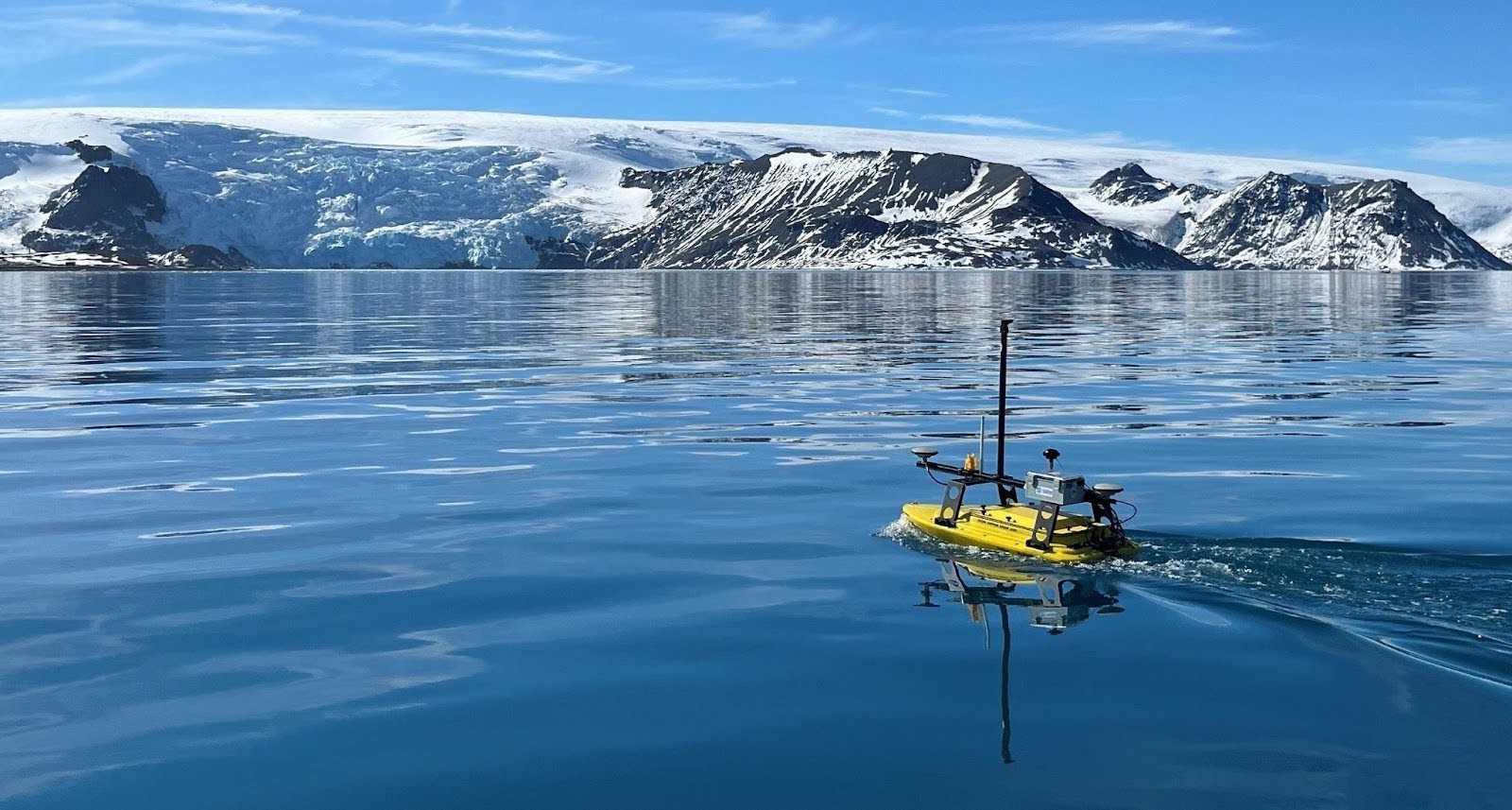
“One thing we were able to do was collect new mapping data about the seafloor in areas that haven’t been covered before.”
“An opportunity like this doesn’t come along very often, and a lot of people and a lot of science has benefited from this, and it has created new opportunities to take Canadian research further at an international level.”
To learn more about the Canadian academic delegation, as well as the important research that came out of the Antarctic expedition, follow MEOPAR: Marine Environmental Observation, Prediction and Response Network on LinkedIn.