A deep-dive into rip currents
Fathom Fund project studies the social dimensions of beach safety in PEI.
It’s estimated that 80% of Canada’s drownings and rescues can be linked back to rip currents, but is the average beachgoer even considering the risks associated with their favourite shoreline? Curious about the social dimensions of the common hazard, University of Windsor Master’s student Summer Locknick applied to MEOPAR’s Fathom Fund with the aim of spending her namesake season doing research on this topic at two of Prince Edward Island’s most popular tourist beaches. She hoped her findings would help inform safety strategies, resulting in less drownings long-term. Thirty-six Kickstarter backers did too, donating over $6,000 towards her project costs and unlocking top-up funds from MEOPAR.
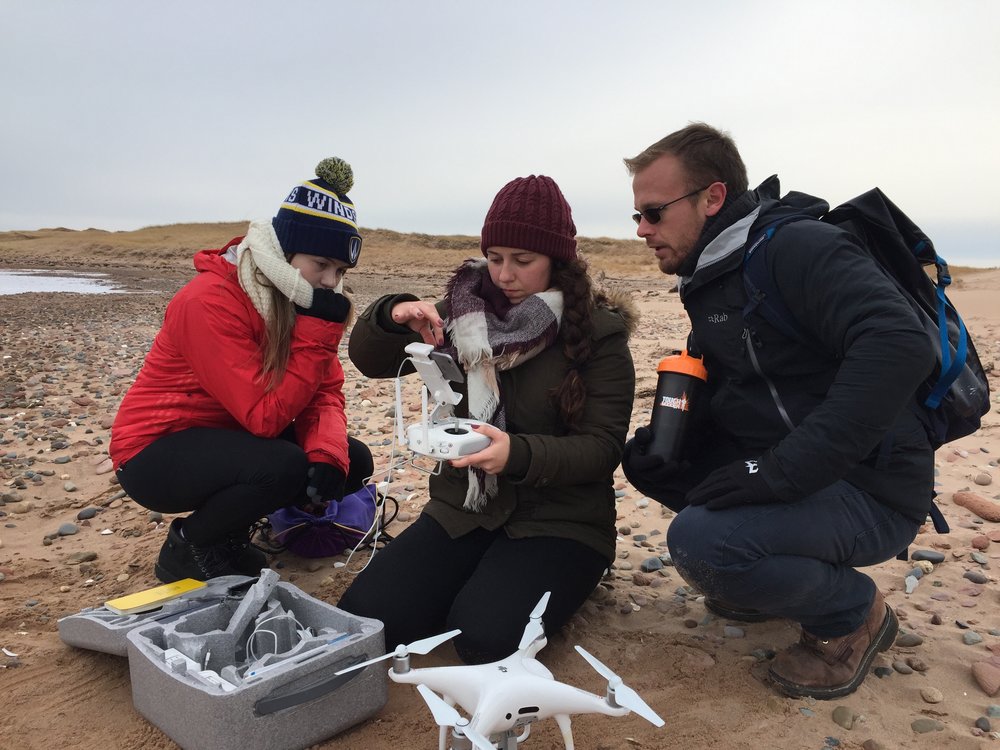
“I thought the Fathom Fund would be a good fit for my research project because it didn’t fall into the traditional natural science and engineering projects that typically get funded,” says Locknick. “It was a unique opportunity to get the community involved, since they are the ones who ultimately benefit from the research.” In partnership with Parks Canada, she administered over 500 surveys to folks at Cavendish and Brackley beaches on PEI’s north coast, gathering information on beachgoer behaviour and background as well as coastal knowledge. Locknick also conducted a photo study to track conditions, beach morphology, the number of people in the water and where they chose to sit. Based on her early findings, she was able to make recommendations to Parks Canada regarding safety strategies.